
How you can live greener

A lot of us live very unsustainable lives
From cars to electricity to food wastage to pretty lawns
We’re killing the environment and most people don’t even know how they can fix it
Well, you’re not most people.
-
Eat less meat
Agriculture is one of the leading causes of climate change. You need to cut down forests for pastures and factories. Cows produce a lot of methane (a very potent greenhouse gas) when they belch. 1 kg of beef is 1 ton of CO2 emitted. And besides, the less animals in small cages the better.
Support local farms
No matter what your diet is like, it would be several times better for the environment if the food was locally sourced. Food from local farms cuts transportation costs & food waste. It also likely means less chemicals (like pesticides and herbicides). If you are going to eat meat, eat it locally.
Don’t waste
When your food waste goes to a landfill, it rots. When it rots, it produces methane, a more potent (more harmful) greenhouse gas than carbon dioxide. Bottom line: if you are lucky enough to have food on your table, don’t waste it.
-
Install solar panels in your home
Most states in the US have a “net metering” policy which means that if you install solar panels, and use them as your primary source of energy, then the surplus energy you produce goes to the grid, and you get paid for this. This is a net economic gain in the long term for consumers.
Be energy efficient
It’s better for the planet and your bank account. Air-dry dishes and clothes. Install LED light bulbs. Get a smart thermostat. Unplug appliances and electronics at night. Doing these simple things makes you use less energy and pay less money to your utility company.
-
Utilize rainwater
In many neighborhoods, there is a lot of rainfall and one thing that you can do is install rain barrels or rainwater collection irrigation systems. These things collect rainwater then allow you to use it for your irrigation. This prevents rainwater wastage and daily water overuse.
Take greener showers
No, I’m not asking you to take shorter showers. There are systems that you can install, such as recirculating shower systems, which filter and recycle your shower water, or greywater systems, which use your shower and washing machine water to water the plants. There are several of these types of systems and they are great for your showers to be eco-friendly.
-
Public transportation
By utilizing public transportation, like buses and trains, you are subtracting the emissions that would have been made if you took an individual vehicle. Even if some forms of public transportation still run on fossil fuels, it’s on-net better than using your own fossil-fuel powered vehicle
Walk and bike short distances
Great for the environment and even better for you. Walking and biking are good forms of exercise that also take away from the emissions that would have come from a car or bus.
Get an electric car
EVs aren’t all good. But, they are better for the environment than gas-guzzlers, so if you find yourself driving a lot, an EV might be a greener choice. They are also more economical in the long-term, and you can charge them with solar panels in your house.
-
Google how to dispose of tricky things before dumping it in the trash
Oil, furniture, electronics, batteries, all of these and more are things which are weird when it comes to disposal. Before just chucking them in the trash can, you should do a quick Google search to make sure it is okay to do that. Many times it is better to dispose of these things differently, so it is always good to double check.
Know your area’s recycling programs
Many towns and districts have recycling programs in which they take care of your hard-to-recycle items. Make sure you know what programs your town has and tell people about it - this will clear up a lot of confusion on things like batteries and electronics! If there isn’t a program, you can always urge your town to start one.
-
Reuse, remake, refurnish, reutilize, reprocess, repurpose, BEFORE recycling
Everywhere it is taught that you need to recycle. Well, let me tell you, recycling is not going to solve our problem. Before recycling you need to do all the things I listed above. You need to find ways to use the materials that you are done with in a different way. By doing this, you will be making the impact you want to make, not by just tossing everything in that blue bin.
Make sure your school/company/organization is actually recycling
Many schools and companies have recycling programs, but a lot of these programs are ineffective. Either the organization doesn’t actually recycle these things, or people aren’t using them properly, by not separating their trash, or by throwing everything into one bin. You should always ask your school/company what is happening to their recycled materials.
-
Don’t waste food
This was mentioned under “food”, but I’ll say it again. Not wasting food goes without saying, but when food ends up in the landfill, it rots and emits a lot of methane, a greenhouse gas which is worse than CO2. If you are going to throw your food out, compost it and prevent these emissions.
Don’t waste energy
Be energy efficient, this was listed under “energy”. Making energy, at least the way it is today, creates a lot of emissions. By being energy efficient and saving energy, you are reducing the emissions that would have been made otherwise from energy production.
Just… don’t waste
It’s good advice. Wasting, no matter what it is, is bad for the environment. It takes emissions to make, to package, to transport, and then to dispose of everything. No matter what you are wasting, it is a source of emissions and is therefore negative for the environment, so just don’t waste. Take what you need and use it to its maximum capacity, but don’t waste.
-
Install electric furnaces and heaters
Electric furnaces and heaters are actually cheaper than the ones that run on natural gas. By installing one, you are doing a favor for the environment and your bank account. In the short and long term you are saving money, so it’s definitely an investment you should make.
Use renewable energy for heating
Using things like solar panels, hydroelectric, and wind power to heat your house are all examples of renewable energy sources that are better than natural gas heaters. Installing renewables is getting easier and easier, especially with things like net metering, so this is another great way to heat your house without a natural gas furnace.
Use other alternatives… just not fossil fuels.
There are also several other alternatives to heat your home, such as modern wood burners, pellet stoves, and geothermal heating that can be sustainable ways to heat your home.
-
Vote for political leaders who care
Political leaders have a lot of power in making change. If you are old enough to vote, one thing that you can always do to help halt climate change is voting for political leaders who have the climate crisis on their agenda. This doesn’t just mean federally. You can definitely help your community by voting for a mayor or governor who wants to make your area greener.
Urge your current political leaders to think about climate change.
You can do something as simple as writing a letter to your local representative asking about what’s being done, or something as radical as organizing a protest or petition. If your political leader sees that there is a lot of support for this topic, they will automatically be inclined to act on it.

Financially-friendly climate technology that you should be investing in
There are a lot of technologies out there that are climate friendly and have subsidies on them, or are just cheaper than its fossil-fuel counterpart. People simply don’t know what these are and how to buy them. Here are some really climatically beneficial technologies that you can purchase for a cheaper price.
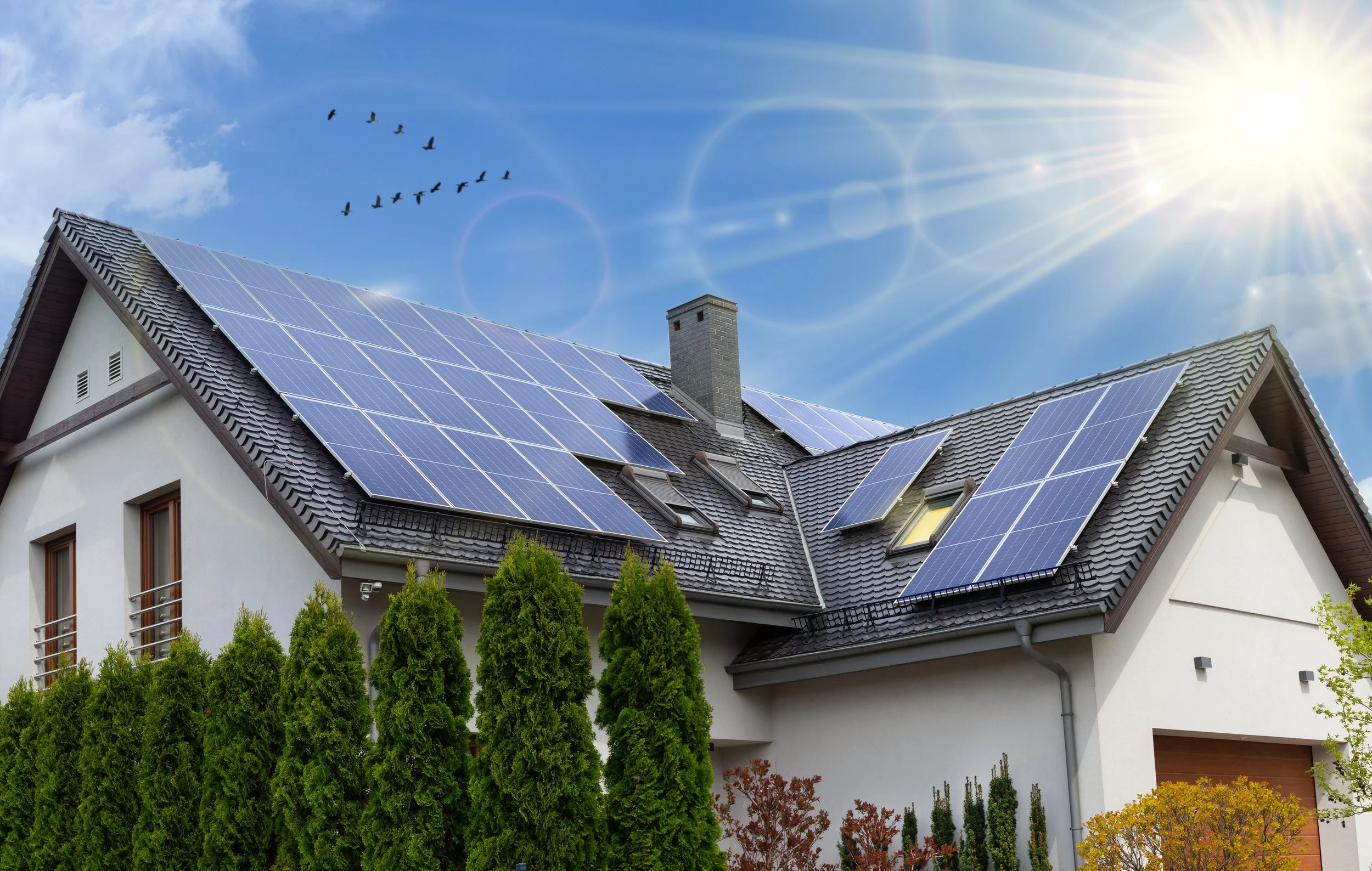
What they are:
Solar panels are a utility that you can install on the roof of your house. They harness sunlight and convert it into usable electricity.
Solar panels
Why they are better:
Solar panels are better than using electricity from the grid because they use the sun to make electricity, which is a renewable source of energy, or a source that never runs out. The electricity grid, on the other hand, typically makes electricity by burning coal, and this is obviously bad because burning coal emits carbon dioxide and coal is a limited, non-renewable source of energy. Therefore, solar energy, or energy from the sun, is a zero-carbon, climate-friendly way to generate electricity, as opposed to coal from the electric grid.
Note: some grids are approaching net-zero carbon emissions and some are already there. Regardless, solar panels are a more environmentally friendly, and convenient choice. It takes energy and infrastructure to transport the electricity from the grid to your home, a problem which is avoided with in-home solar panels. Furthermore, by installing solar panels, you are making yourself energy efficient, meaning that you produce all the energy that you need and you don’t rely on an outside source (like the grid). This is convenient because things like black-outs and power outages will no longer apply to you.
How they are more economical:
Many states in the US and countries around the world have a policy in place called “net-metering”. Net metering incentivizes people to install solar panels. With net metering, the surplus energy produced from the solar panels is sold back to the grid, which is a financial gain for the consumer, as it eliminates a utility bill and earns money with excess power. This method also prevents the energy from being wasted. Additionally, net metering is better than a completely off-grid solar system because it eliminates the need for expensive solar storage batteries.
Bottom line, if your area has net metering policies in place, solar panel installation is a must. It is feasible, economically-beneficial, climate-friendly, and more convenient. Tell your friends and family about net metering, and if your area doesn’t have it, send a letter to your political leader about it. Even people who don’t support climate action have been shown to install solar panels in their home because of the finanical gain from net metering.

Electric vehicles
What they are:
Electric vehicles are vehicles that have electric motors which run on electricity stored in batteries. They don’t run on gasoline or fossil fuels, they just run on electricity.
Why they are better:
Electric cars are controversial. A lot of people buy them thinking they are fully green, but an electric car is not very beneficial if the grid is still powered by coal and fossil fuels. Electric vehicles are better if one of two things is true: one is that your house has solar or wind energy, so you can use this power to charge your car. This is definitely a very feasible option since net metering policies are already in place to install wind and solar. The second is having a renewable grid. This option is already available in some places, but not most. When either of these options is available, then only is it actually environmentally beneficial to get an electric vehicle. The reason being that if you buy an electric car, which obviously runs on electricity, if the electricity is emitting carbon dioxide, it is less beneficial than if the electricity was carbon neutral.
Note: while carbon emissions are one thing to consider, EV batteries require the mining of lithium, which is another big problem. Most lithium mining practices require large amounts of land and water and produce a lot of carbon emissions. There are some mining methods that are environmentally-friendly, however, those aren’t widely used. So, if you are going to buy an electric car, it should be powered in an eco-friendly way, since it was already harmful to mine the lithium for the battery. You can learn more from this article that we posted on the climate blog.
How they are more economical:
The upfront cost for EVs is higher than that of an internal combustion engine (ICE), however, since EVs are powered with electricity, you are saving money in the long term that you would otherwise be spending on gas. This is especially helpful with many places having rising gas prices.
Furthermore, governments are starting to mandate electric vehicles and provide financial incentives through legislation. These are huge steps in the right direction and they make buying an EV even easier, from a financial perspective.
Bottom line, EVs are great only if they are being powered with green electricity. They are not at their full green capacity yet, but they are generally better than ICEs. They are easily accessible as almost every big car brand and dealership offers electric cars. They are a financially smart decision because you save money on gas in the long term and there are many financial incentives that are in place and being put in place. Choosing to buy an EV is a big decision, but the essential information that you need to consider is all here. If you end up buying an EV, just make sure it’s being powered from green electricity and you will be making a really great environmental impact.